Navigating the complex world of government contracts requires thorough understanding of the Federal Acquisition Regulation (FAR) and the Defense Federal Acquisition Regulation Supplement (DFARS). These regulatory frameworks establish the rules governing how federal agencies acquire supplies and services, while imposing critical compliance requirements on contractors and suppliers pursuing government work. For defense contractors working with the Department of Defense (DOD), DFARS compliance has become increasingly demanding, particularly regarding cybersecurity requirements like NIST SP 800-171 and the Cybersecurity Maturity Model Certification (CMMC). This comprehensive guide demystifies the essentials of FAR and DFARS, explains key compliance obligations including cybersecurity standards for protecting controlled unclassified information (CUI), and provides practical strategies to help contractors stay compliant and competitive in federal procurement. Whether you're new to government contracting or seeking to strengthen your compliance efforts, understanding these regulations is essential for success in the defense sector and broader federal marketplace.
The Federal Acquisition Regulation (FAR) establishes the primary set of rules governing federal procurement processes across all federal agencies. Enacted to standardize how government agencies purchase goods and services, FAR applies to all federal contractors regardless of which agency they work with. The regulation covers everything from competition requirements and contract types to payment terms and ethical standards, creating a consistent framework for government contracting.
DFARS represents the Defense Federal Acquisition Regulation Supplement, which adds DOD-specific requirements on top of the baseline FAR framework. While FAR applies across all federal procurement, DFARS includes additional provisions addressing unique defense contracting needs including national security considerations, supply chain security, and protection of sensitive information. Defense contractors must comply with both FAR and DFARS requirements, making their compliance journey more complex than contractors working solely with civilian agencies.
Understanding FAR and DFARS matters because compliance directly impacts your ability to win and maintain government contracts. Contracts include specific FAR and DFARS clauses that become legally binding terms and conditions. Violations can result in contract termination, financial penalties, suspension or debarment from federal contracting, and even criminal prosecution in severe cases. For organizations seeking to be a trusted partner in the defense industrial base, demonstrating robust compliance with FAR and DFARS requirements is non-negotiable. Resources like understanding the government procurement cycle provide valuable context for how these regulations operate within broader acquisition processes.
FAR serves as the foundational regulatory framework for all federal procurement, establishing uniform policies and procedures that government agencies must follow when acquiring supplies and services. The role of FAR extends beyond simply setting rules—it creates transparency, promotes competition, ensures fair treatment of contractors, and protects taxpayer interests throughout the acquisition process.
The regulation addresses the complete contracting lifecycle from pre-award activities through contract closeout. FAR covers how agencies must publicize opportunities, evaluate proposals, select contractors, negotiate terms, administer active contracts, and resolve disputes. For contractors, understanding specific FAR provisions relevant to their work is essential. Key areas include contract types (fixed-price, cost-reimbursement, time-and-materials), small business programs, socioeconomic requirements, intellectual property rights, and payment procedures.
FAR compliance means more than following rules—it requires maintaining systems and documentation proving adherence to requirements. Contractors must implement accounting systems that segregate direct and indirect costs properly, maintain timekeeping records supporting labor charges, document subcontracting activities, and keep records for audit purposes. Government agencies and the Defense Contract Audit Agency (DCAA) conduct audits verifying FAR compliance, making strong internal controls essential. Organizations can strengthen their approach by exploring winning strategies for government RFP responses that demonstrate compliance capabilities.

DFARS supplements FAR by adding requirements specific to Department of Defense procurement and the unique needs of defense contracting. While FAR establishes baseline standards applying to all federal contractors, DFARS regulations impose additional obligations that contractors must meet when working with the DOD and its components including the Army, Navy, Air Force, and defense agencies.
Many DFARS requirements address national security concerns that are particularly relevant to the defense sector. These include clauses related to supply chain security, prohibitions on contracting with entities from adversarial nations, requirements for purchasing domestically-produced items, and restrictions on telecommunications equipment. DFARS also includes stringent requirements for protecting defense information and controlled technical information that could provide adversaries with insights into U.S. military capabilities or vulnerabilities.
The cybersecurity provisions within DFARS represent some of the most impactful additional requirements for defense contractors. DFARS clause 252.204-7012 mandates that contractors implement specific safeguarding measures for covered defense information residing in contractor information systems. This clause requires compliance with NIST SP 800-171, a comprehensive set of 110 security requirements designed to protect controlled unclassified information in nonfederal information systems and organizations. The Defense Industrial Base (DIB) must take these requirements seriously, as they form the foundation for the CMMC program that now governs cybersecurity compliance for DOD contracts.
DFARS cybersecurity requirements have evolved significantly in recent years, reflecting the increasing sophistication of cyber threats targeting the defense industrial base. Understanding these requirements is essential for any defense contractor handling sensitive information on behalf of the DOD.
The cornerstone of DFARS cybersecurity compliance is DFARS 252.204-7012, "Safeguarding Covered Defense Information and Cyber Incident Reporting." This clause requires contractors to provide adequate security on all covered defense information (CDI) that resides in or transits through contractor information systems. CDI includes both controlled unclassified information (CUI) and other information that requires safeguarding or dissemination controls according to applicable laws, regulations, or government-wide policies.
Contractors must implement the security requirements specified in NIST SP 800-171, "Protecting Controlled Unclassified Information in Nonfederal Information Systems and Organizations." This National Institute of Standards and Technology standard establishes 14 control families covering access control, awareness and training, audit and accountability, configuration management, identification and authentication, incident response, maintenance, media protection, personnel security, physical protection, risk assessment, security assessment, system and communications protection, and system and information integrity.
Beyond implementing these cybersecurity controls, contractors must also report cyber incidents affecting covered defense information within 72 hours of discovery. This incident reporting requirement ensures that the DOD can rapidly assess potential compromises and take protective measures. Additionally, contractors must conduct annual self-assessments documenting their compliance with NIST SP 800-171 and submit scores through the Supplier Performance Risk System (SPRS). These self-assessments create transparency about contractor cybersecurity posture and help identify compliance gaps requiring remediation.
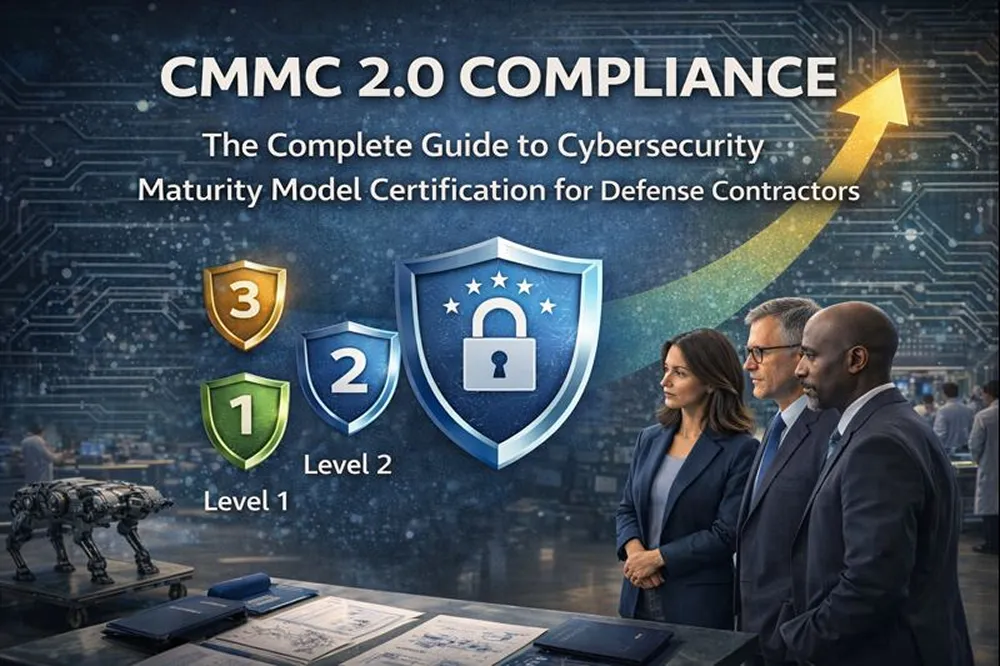
The Cybersecurity Maturity Model Certification (CMMC) represents a fundamental shift in how the DOD verifies and enforces cybersecurity compliance among defense contractors. Rather than relying on contractor self-assessments, CMMC requires third-party assessment organizations to certify that contractors meet applicable cybersecurity standards before they can be awarded contracts involving CUI.
CMMC establishes three certification levels aligned with different types of information and risk profiles. CMMC Level 1 focuses on basic cybersecurity hygiene and applies to contracts involving only Federal Contract Information (FCI). CMMC Level 2 requires full implementation of NIST SP 800-171 and applies to contracts involving CUI, which encompasses the vast majority of defense contracting. CMMC Level 3 adds advanced and progressive cybersecurity practices for contracts involving critical programs or highly sensitive information requiring enhanced protection.
The transition to mandatory CMMC certification creates significant implications for defense contractors. Organizations that previously submitted self-assessments now must undergo formal audits by certified third-party assessors. These assessments verify actual implementation and effectiveness of cybersecurity practices rather than relying on contractor attestations. Achieving CMMC certification requires investment in technical controls, policy development, personnel training, and potentially consulting services to address identified deficiencies.
For contractors, CMMC compliance has become a competitive differentiator and barrier to entry. Organizations without appropriate CMMC level certifications will be unable to compete for contracts requiring those certification levels, effectively restricting their access to DOD opportunities. This reality makes early preparation and investment in robust cybersecurity practices essential for maintaining market position. Understanding tools to find government contract opportunities helps contractors identify which opportunities their current CMMC status qualifies them to pursue.

Achieving and maintaining DFARS compliance requires a systematic approach addressing both technical security controls and administrative procedures. Contractors should follow a structured methodology to ensure compliance and prepare for verification activities.
Begin with a comprehensive gap assessment comparing your current cybersecurity practices against NIST SP 800-171 requirements. This assessment should examine all 110 security requirements across the 14 control families, documenting which controls are fully implemented, partially implemented, or not implemented. Understanding compliance gaps provides the foundation for developing a remediation plan and prioritizing investments. Many organizations engage cybersecurity consultants or use specialized assessment tools to ensure thorough evaluation.
Develop and implement a System Security Plan (SSP) that documents your information systems architecture, security controls implementation, and risk management approach. The SSP serves as the master document describing how your organization protects controlled unclassified information and meets DFARS requirements. It should address system boundaries, network diagrams, hardware and software inventories, security control implementation details, and planned or implemented compensating controls for any requirements you cannot fully satisfy.
Establish policies and procedures governing all aspects of CUI handling including access controls, incident response, media protection, and personnel security. Written policies demonstrate organizational commitment to cybersecurity compliance and provide guidance for employees about their responsibilities. Procedures should be specific enough that personnel can follow them consistently, yet flexible enough to accommodate legitimate business needs. Regular training ensures that all employees understand these policies and their role in maintaining compliance. Organizations should also review guidance on mastering government proposal writing to effectively communicate compliance capabilities in proposals.
Beyond pre-award requirements and cybersecurity standards, FAR and DFARS establish comprehensive rules for contract administration throughout the performance period. Understanding these ongoing compliance requirements helps contractors avoid common pitfalls that can jeopardize their government work.
Invoicing and payment procedures represent a critical area where contractors must ensure compliance. FAR and DFARS specify how contractors should submit payment requests, what documentation must support invoices, and timelines for government payment. Most federal contracts now require electronic invoicing through systems like the Wide Area Workflow (WAWF). Contractors must submit proper invoices with required backup documentation, certify the accuracy of payment requests, and maintain records supporting all charges.
Contract modifications and changes require careful navigation of FAR and DFARS procedures. The contract clause 52.243-1, "Changes—Fixed Price," gives the government unilateral authority to direct certain changes within the contract's general scope. Contractors must understand their rights and obligations when changes occur, including procedures for requesting equitable adjustments to price or schedule. Properly documenting change impacts and following prescribed notification and claim procedures protects contractor interests while maintaining compliance.
Contract closeout represents the final phase where FAR and DFARS compliance becomes particularly important. Contractors must submit final invoices, complete required reports, resolve all outstanding issues, and return government property. The government cannot make final payment until verifying that the contractor has fulfilled all obligations and delivered all required deliverables. Delays in closeout can tie up resources and complicate financial reporting, making efficient closeout procedures part of overall compliance strategy.
Government contractors face numerous challenges maintaining compliance with the extensive requirements imposed by FAR and DFARS. Recognizing these common obstacles helps organizations develop proactive strategies to address them.
The complexity and volume of regulations create significant compliance burdens, particularly for small businesses with limited administrative resources. FAR alone contains thousands of pages, and when combined with DFARS, agency supplements, and related regulations, the total body of rules becomes overwhelming. Contractors must determine which specific requirements apply to their contracts, implement necessary systems and procedures, train personnel, and maintain documentation—all while delivering technical performance and managing business operations.
Keeping pace with regulatory changes presents another persistent challenge. FAR and DFARS undergo regular updates as agencies respond to new legislation, policy priorities, and emerging issues. The cybersecurity requirements have evolved dramatically in recent years, with CMMC representing a fundamental shift in DOD's approach. Contractors must monitor regulatory developments, assess impacts on their compliance programs, and implement necessary changes. This ongoing effort requires dedicated attention that many organizations struggle to maintain amid competing priorities.
Subcontractor compliance creates additional complexity for prime contractors. FAR and DFARS requirements often flow down to subcontractors, making primes responsible for ensuring their supply chain maintains compliance. This responsibility includes verifying subcontractor cybersecurity compliance, monitoring performance, and addressing deficiencies. As the CMMC program matures, primes will need to verify that subcontractors hold appropriate CMMC level certifications before awarding subcontracts, adding another layer of due diligence to subcontractor management.

Government agencies employ various audit mechanisms to verify contractor compliance with FAR and DFARS requirements. Understanding what audits involve and how to prepare helps contractors navigate these reviews successfully.
The Defense Contract Audit Agency (DCAA) conducts audits of contractor accounting systems, costs, and pricing to ensure compliance with cost accounting standards and FAR requirements. DCAA audits can occur at different stages including pre-award surveys for new contractors, incurred cost audits verifying actual costs charged to contracts, and special audits investigating specific concerns. Contractors should maintain comprehensive documentation supporting all costs, implement compliant timekeeping and accounting systems, and ensure their indirect rate structures meet DCAA requirements.
CMMC assessments represent a new form of verification specifically targeting cybersecurity compliance. Unlike traditional audits, CMMC assessments are conducted by third-party certification organizations rather than government auditors. Assessors review documentation, interview personnel, and examine technical implementations to verify that contractors have properly implemented required cybersecurity practices. The assessment process can take several days to weeks depending on organization size and system complexity, requiring significant contractor time and resources.
Responding effectively to audit findings is crucial for maintaining compliance and contractor reputation. When auditors identify deficiencies, contractors should acknowledge issues promptly, develop corrective action plans addressing root causes, implement remediation measures, and document all corrective actions. Defensive or dismissive responses typically worsen the situation, while collaborative engagement often leads to better outcomes. Maintaining positive relationships with auditors while protecting contractor interests requires professionalism and thorough understanding of applicable regulations.
Contractors don't need to navigate the complex landscape of government contracting regulations alone. Numerous resources exist to support compliance efforts and provide guidance on interpreting requirements.
The Acquisition.gov website serves as the official repository for FAR and related acquisition regulations. The site provides searchable access to current regulations, proposed rule changes, and regulatory history. Contractors should bookmark this resource and check it regularly for updates affecting their compliance obligations. The Defense Acquisition University also offers free online courses covering FAR and DFARS topics, providing valuable training for contract administrators and compliance personnel.
The National Institute of Standards and Technology publishes comprehensive guidance on implementing cybersecurity controls including NIST SP 800-171 and related special publications. These documents provide detailed explanations of each security requirement, discussion of implementation approaches, and examples organizations can adapt to their environments. NIST also maintains a computer security resource center with tools, templates, and best practices supporting cybersecurity compliance.
Professional associations like the National Contract Management Association and National Defense Industrial Association offer networking opportunities, training programs, and industry advocacy for government contractors. These organizations provide forums where contractors can learn from peers, stay informed about regulatory developments, and participate in shaping future policies. Engaging with these communities helps contractors build knowledge and relationships supporting long-term compliance success.
Industry consultants specializing in government contracting compliance can provide valuable support, particularly for organizations new to federal work or addressing complex requirements. Consultants help with gap assessments, System Security Plan development, CMMC preparation, proposal development, and compliance program implementation. While consulting services represent an investment, they often prove cost-effective compared to learning through trial and error or suffering penalties from compliance failures.
Maintaining compliance while remaining competitive in government procurement requires strategic thinking and operational excellence. Successful contractors treat compliance not as a burden but as a competitive advantage demonstrating their reliability as government partners.
Invest in compliance infrastructure proactively rather than reactively addressing issues only when audits or problems occur. Develop robust accounting systems, implement comprehensive cybersecurity programs, create compliant policies and procedures, and train personnel thoroughly. While these investments require upfront costs, they pay dividends through reduced audit findings, faster contract awards, stronger past performance ratings, and enhanced reputation.
Integrate compliance into business development and proposal strategies. When responding to solicitations, explicitly address how your organization meets applicable FAR and DFARS requirements including cybersecurity standards. Demonstrating existing compliance capabilities strengthens proposals and accelerates contract award by reducing government concerns about contractor readiness. For complex requirements, consider teaming with partners who bring complementary compliance capabilities.
Build a culture where compliance is everyone's responsibility rather than just the compliance department's concern. Employees who understand how their actions impact regulatory compliance will make better decisions and catch potential issues early. Regular training, clear communication about compliance expectations, and accountability mechanisms help embed compliance throughout organizational culture.
Monitor the regulatory landscape continuously and adapt to changes proactively. Subscribe to government contracting publications, participate in industry associations, attend training sessions, and maintain relationships with contracting officers and program managers. Early awareness of coming changes provides time to adjust systems and procedures before new requirements take effect, preventing last-minute scrambles and compliance gaps.
Understanding compliance with FAR and DFARS requirements represents a fundamental prerequisite for success in government contracting, particularly within the defense sector. While the regulations impose significant obligations, they also create structure and transparency that enable fair competition and protect both contractor and government interests. Organizations that invest strategically in compliance capabilities position themselves for long-term success as trusted government partners.
Ready to strengthen your FAR and DFARS compliance program? Contact our team to discuss how we can help you navigate federal contracting requirements and compete effectively for government opportunities.

Are you curious about the networking events near you? Together we can expand your network and watch your pipeline exponentially grow.