


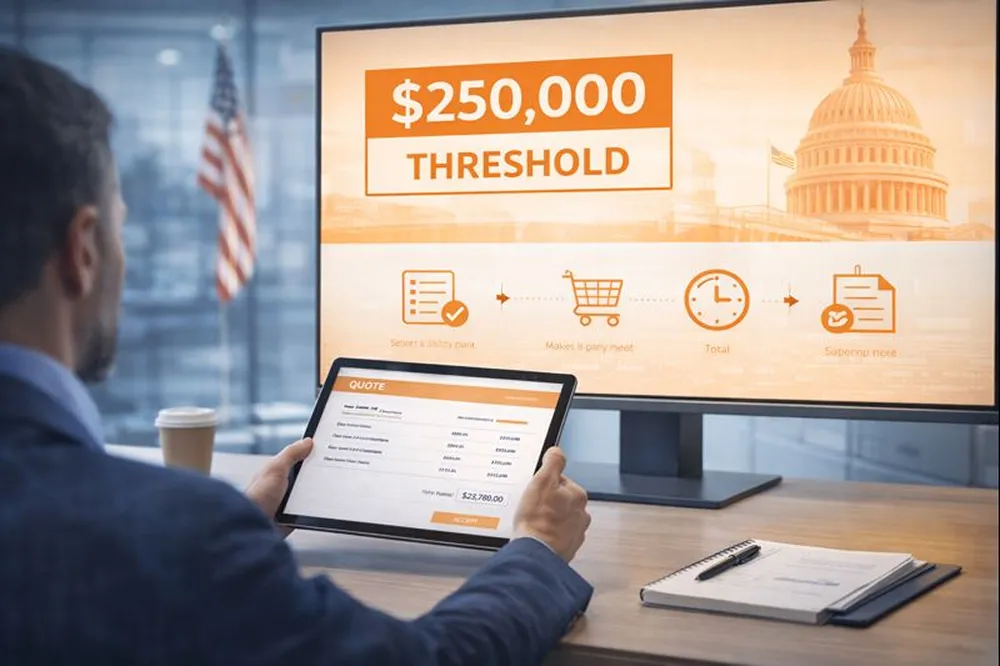
Simplified Acquisition Procedures (SAP) under FAR Part 13 represent a streamlined approach to federal procurement that enables contracting officers to acquire supplies and services more efficiently while reducing administrative burden for both government agencies and contractors. These procedures apply to acquisitions below the Simplified Acquisition Threshold—currently $250,000—and create accessible opportunities for small business contractors to enter and grow within the federal marketplace. Understanding how to use simplified acquisition procedures effectively can transform your government contract strategy, as these streamlined processes govern a substantial portion of federal spending while requiring less complex proposals and faster decision cycles than full and open competition. Whether you're a federal contractor pursuing your first government contract or an established business seeking to optimize your acquisition process participation, mastering SAP requirements under Part 13 is essential for success. This comprehensive guide explains what simplified acquisitions are, how they differ from standard procurement, the specific procedures contracting officers must follow, and practical strategies for contractors to win contracts awarded using simplified acquisition procedures.
Simplified Acquisition Procedures represent a set of streamlined methods that federal agencies use to acquire supplies and services in amounts that do not exceed the simplified acquisition threshold. These procedures, codified in FAR Part 13, simplify the acquisition process by reducing documentation requirements, accelerating timelines, and providing contracting officers with greater flexibility compared to standard procurement methods.
The Federal Acquisition Regulation authorizes the use of simplified procedures specifically to reduce administrative costs and improve opportunities for small businesses while maintaining appropriate competition and taxpayer protection. FAR Part 13 establishes that agencies may use SAP for purchases up to the Simplified Acquisition Threshold, currently set at $250,000 for most acquisitions. The procedures in this part balance efficiency with accountability, enabling rapid procurement while ensuring appropriate oversight and compliance with federal requirements.
The fundamental principle behind simplified acquisitions is that government should not spend more to buy something than the thing itself is worth. Complex procurement processes with extensive documentation, formal evaluation plans, and strict source selection procedures make sense for major acquisitions worth millions of dollars, but applying those same rigorous processes to a $50,000 purchase would be inefficient and wasteful. SAP provides the streamlined alternative that matches process complexity to acquisition value, benefiting both agencies and contractors. Understanding the government procurement cycle helps contractors see how simplified acquisitions fit within broader federal purchasing patterns.
The distinction between simplified acquisition procedures and standard procurement processes affects virtually every aspect of how contracts are solicited, evaluated, and awarded. These differences create specific opportunities and challenges for federal contractors navigating the marketplace.
Documentation requirements under SAP are substantially reduced compared to full and open competition. While major procurements require extensive acquisition plans, formal source selection plans, detailed evaluation criteria, and comprehensive documentation of every decision, simplified acquisitions permit much leaner documentation. Contracting officers may use streamlined formats, rely on oral solicitations for certain purchases, and document decisions less formally. This reduction in paperwork accelerates the acquisition process dramatically—what might take months under full competition can occur in weeks or even days using simplified procedures.
Competition approaches differ significantly between SAP and standard procurement. While both require competition to the maximum extent practicable, simplified procedures implement this requirement more flexibly. For acquisitions exceeding the micro-purchase threshold but below the Simplified Acquisition Threshold, contracting officers must promote competition by soliciting multiple sources—typically at least three quotes when practicable. However, SAP does not require the formal publicized solicitations, lengthy response periods, or elaborate evaluation procedures characteristic of full and open competition. Contracting officers may solicit competitive quotations through phone calls, emails, or informal requests rather than formal solicitation documents posted to government-wide point of entry systems.
Evaluation procedures under simplified acquisitions emphasize speed and practicality over comprehensive analysis. Rather than formal evaluation plans with weighted criteria, detailed scoring, and competitive range determinations, simplified procedures allow contracting officers to make award decisions based on straightforward comparisons of price, technical acceptability, and past performance. The goal is identifying acceptable solutions at fair and reasonable prices without exhaustive evaluation. This streamlined approach means contractors should focus their responses on clearly showing they meet requirements and offer good value rather than crafting elaborate technical proposals addressing every conceivable evaluation factor.

The Simplified Acquisition Threshold represents the dollar threshold below which agencies may use simplified acquisition procedures rather than requiring full and open competition processes. This threshold serves as a critical dividing line in federal procurement, fundamentally changing how agencies acquire supplies and services and how contractors must respond to opportunities.
As of October 1, 2020, the Simplified Acquisition Threshold is set at $250,000 for most federal acquisitions. This represents an increase from the previous threshold of $150,000, reflecting both inflation adjustments and policy decisions to expand the applicability of streamlined procedures. The higher threshold enables agencies to use simplified procedures for a broader range of acquisitions, reducing administrative burden while maintaining appropriate competition and small business access.
Different threshold amounts apply in specific circumstances, creating complexity that contractors must navigate. For acquisition of commercial items using the procedures in FAR Subpart 13.5, agencies may use simplified procedures for amounts up to $7.5 million for acquisitions as described in that subpart. This significantly higher threshold for certain commercial products and commercial services reflects government policy encouraging commercial item acquisition and recognizing that commercial marketplace practices already provide appropriate competition and pricing discipline. Additionally, during contingency operations and for contracts to be performed outside the United States, the threshold increases to $800,000, acknowledging operational realities in deployed environments. Understanding which threshold applies to specific opportunities helps contractors identify the appropriate response approach and competitive landscape. The Acquisition.gov website provides official guidance on current threshold amounts and any pending changes.
Below the Simplified Acquisition Threshold exists an even more streamlined category: micro-purchases. The micro-purchase threshold, currently set at $10,000 for most purchases, enables the most simplified acquisition approach in federal contracting with minimal administrative requirements and maximum flexibility for contracting officers.
Micro-purchases typically occur using a government purchase card, allowing authorized personnel to obtain supplies and services immediately without formal solicitation or contract documentation. The purchase card may be used by designated cardholders who have specific spending authorities based on their positions and training. These micro-purchases must still achieve fair and reasonable pricing and promote competition by distributing purchases among qualified suppliers, but formal competition requirements and documentation are minimal. The speed and convenience of purchase card transactions make them ideal for routine, low-value purchases where administrative costs would otherwise exceed the value of efficiency gained.
For contractors, micro-purchases represent accessible entry points into federal contracting with virtually no proposal burden. Establishing relationships with cardholders at agencies whose missions align with your products or services can generate steady revenue streams. While individual transactions stay below $10,000, cumulative purchases from regular customers can become substantial. The key is making it easy for cardholders to find and buy from you—maintaining current registration in the System for Award Management (SAM), holding relevant GSA Schedule contracts, responding quickly to inquiries, and providing excellent customer service that encourages repeat purchases.
Acquisitions exceeding the micro-purchase threshold but not exceeding the Simplified Acquisition Threshold fall into the core SAP category where streamlined procedures apply but with more requirements than micro-purchases. This middle tier—roughly $10,000 to $250,000—represents the heart of simplified acquisition activity where contractors must compete for opportunities but can do so through streamlined quotation processes rather than elaborate proposals. Understanding these tiered thresholds helps contractors calibrate their business development investment and response approaches appropriately for different opportunity sizes.
Small business set-aside requirements create significant opportunities for small business contractors within the simplified acquisition framework. The Small Business Act and implementing regulations mandate that agencies maximize opportunities to small businesses, with specific requirements for acquisitions in this dollar range.
For all acquisitions greater than the micro-purchase threshold but not exceeding the Simplified Acquisition Threshold, the contracting officer must set aside the acquisition for small businesses unless unable to obtain offers from two or more small business concerns that are competitive in price, quality, and delivery. This presumption favoring small business set-asides means that most acquisitions in amounts greater than $10,000 but below $250,000 will be competed exclusively among small businesses, excluding large business competitors. This protected competition significantly improves small business win rates and creates accessible opportunities for companies building federal contracting track records.
Specific socioeconomic small business categories receive additional preferences within the SAP framework. Contracting officers must consider whether to set aside acquisitions for service-disabled veteran-owned small business concerns, HUBZone small businesses, women-owned small businesses, or small disadvantaged businesses. These targeted set-asides further limit competition, creating even more favorable conditions for certified small businesses in these categories. The order of precedence for set-asides follows specific rules in the Small Business Act, with certain categories taking priority when multiple set-aside options exist.
Even when simplified acquisitions aren't formally set aside, small business considerations influence award decisions. Contracting officers may consider whether contractors are small businesses when evaluating quotations, and agencies must meet government-wide small business contracting goals that create institutional incentives to award work to small concerns. These structural advantages mean small businesses often compete effectively throughout the simplified acquisition space. Resources from the Small Business Administration provide detailed guidance on set-aside programs, eligibility requirements, and certification processes for various socioeconomic categories.

The relationship between commercial item acquisition procedures in FAR Part 12 and simplified acquisition procedures in Part 13 creates important flexibilities that agencies leverage to streamline procurement. Understanding this intersection helps contractors navigate opportunities that combine both frameworks.
FAR Subpart 13.5 establishes special simplified procedures for certain commercial products and commercial services in amounts greater than the Simplified Acquisition Threshold but not exceeding $7.5 million. These procedures for certain commercial products combine elements of both Part 12 commercial item procedures and Part 13 simplified acquisition procedures, creating a hybrid approach that extends simplified procedures beyond the standard threshold when acquiring commercial items. This expanded applicability reflects policy encouraging commercial item acquisition and recognizing that commercial marketplace practices provide appropriate competition and pricing discipline.
When using simplified acquisition procedures for commercial items, the policies applicable to the acquisition of commercial items in Part 12 apply subject to the order of precedence for other provisions in Part 13. This means that commercial item terms and conditions, evaluation approaches, and other Part 12 provisions govern, but within the streamlined framework that simplified procedures provide. Contractors responding to these opportunities should understand both the commercial item requirements and simplified procedure approaches, as elements of both influence how agencies structure and evaluate these acquisitions.
The practical benefit of this integrated approach is that agencies can acquire commercial products and commercial services using streamlined procedures up to much higher dollar values than standard simplified acquisitions permit. For contractors offering commercial items—products or services regularly sold to the general public or offered in the commercial marketplace—this creates opportunities to participate in larger acquisitions through simplified procedures rather than full and open competition. Marketing your offerings as commercial items and maintaining GSA Schedule contracts that facilitate commercial item purchasing maximizes access to these streamlined acquisition opportunities. Understanding winning strategies for government RFP responses helps contractors respond effectively even to these streamlined opportunities.
Competition remains a fundamental requirement even when simplified acquisition procedures are used, though implemented with greater flexibility than full and open competition processes. Understanding these competition requirements helps contractors identify opportunities and agencies ensure compliance with procurement regulations.
The contracting officer must promote competition to the maximum extent practicable when using SAP. For acquisitions exceeding the micro-purchase threshold, this generally means soliciting quotations from multiple sources—typically at least three when practicable based on market research. However, "maximum extent practicable" provides flexibility that full and open competition lacks. Contracting officers may determine that circumstances justify limiting competition, such as when only one source can meet requirements, when urgency precludes broader competition, or when the administrative burden of additional competition would be unreasonable given the acquisition value.
Market research plays a critical role in satisfying competition requirements under simplified procedures. Before limiting competition or determining how many sources to solicit, contracting officers must conduct appropriate market research to understand supplier availability, capabilities, and pricing. This research might involve reviewing GSA schedules, searching SAM for registered contractors, consulting with program personnel about known suppliers, or conducting internet searches. For contractors, being visible through these research channels—maintaining current SAM registration, holding relevant contract vehicles, participating in industry events—increases the likelihood contracting officers will identify and solicit your company when opportunities arise.
Sole-source awards remain permissible under simplified procedures when justified, though requiring appropriate documentation. When only one source can meet requirements or other circumstances justify non-competitive awards, contracting officers may award without competition even using simplified procedures. However, these sole-source decisions must be supported by appropriate justification explaining why competition was not feasible. For contractors, understanding when sole-source opportunities might arise—such as for unique proprietary items, urgent requirements, or follow-on work to existing contracts—helps identify pursuit opportunities outside typical competitive processes. Resources like tools to find government contract opportunities help contractors identify both competitive and sole-source simplified acquisitions.
Responding effectively to simplified acquisition opportunities requires different approaches than formal procurement competitions. The streamlined nature of SAP demands efficiency, clarity, and responsiveness rather than comprehensive documentation characteristic of major proposals.
Quotations for simplified acquisitions should be concise and focused on essential information. While formal proposals for major procurements might span hundreds of pages with detailed technical approaches, management plans, and past performance volumes, quotations for simplified acquisitions typically run just a few pages. Focus on demonstrating you understand the requirement, can deliver the supply or service as specified, offer fair and reasonable pricing, and have relevant experience. Contracting officers evaluating quotations under time pressure appreciate clear, direct responses that make their decision-making easier rather than forcing them to wade through excessive material searching for key information.
Speed matters tremendously in simplified acquisitions, as these opportunities often move from solicitation to award in days or weeks rather than months. Maintaining "proposal-ready" capabilities—including pre-written capability summaries, standard pricing approaches, past performance references, and technical boilerplate—enables rapid response when opportunities emerge. Some contractors dedicate specific personnel to monitor and respond to simplified acquisition opportunities, recognizing that the volume and velocity of these procurements requires dedicated attention. Building organizational capacity for quick turnaround demonstrates the responsiveness that agencies value highly in simplified acquisition contractors.
Relationship development with contracting officers and program personnel who manage simplified acquisitions pays significant dividends. These buyers handle high volumes of smaller procurements and value reliable contractors who deliver consistently and minimize administrative burden. Regular capability briefings, participation in small business events, and professional networking help ensure your company stays top-of-mind when requirements emerge. Unlike major procurements where formal evaluation criteria dominate decisions, simplified acquisitions often favor known, trusted contractors with proven track records of responsive, quality performance. Understanding government proposal writing techniques helps even when creating streamlined quotations for simplified acquisitions.

While the solicitation and award process is streamlined under SAP, contracts awarded using simplified acquisition procedures remain federal contracts subject to significant compliance requirements. Understanding these obligations helps contractors avoid issues that could jeopardize their government contracting privileges.
Standard FAR clauses flow down to simplified acquisition contracts based on dollar value, contract type, and other factors. Even though administrative burden is reduced during the acquisition process, the resulting contracts incorporate applicable requirements related to labor standards, equal opportunity employment, environmental compliance, business ethics, and other fundamental areas. Contractors must understand which clauses apply to their specific contracts and maintain compliance throughout performance. Purchase orders and other simplified acquisition instruments typically incorporate standard terms and conditions by reference rather than spelling out every requirement explicitly, making it essential that contractors understand these incorporated provisions.
Reporting requirements continue throughout contract performance, even for smaller simplified acquisitions. Contractors must submit required reports, maintain appropriate records, comply with invoicing procedures, and meet all performance milestones. Many agencies require electronic invoicing through systems like the Wide Area Workflow (WAWF), and failure to follow proper invoicing procedures can delay payment or create compliance issues. Even small contracts generate past performance evaluations through the Contractor Performance Assessment Reporting System (CPARS), making professional performance on every simplified acquisition important for building the track record essential for competing for larger opportunities.
Small business representation and certification requirements demand particular attention in simplified acquisitions. When contractors represent themselves as small businesses, women-owned small businesses, service-disabled veteran-owned small business concerns, or other socioeconomic categories to qualify for set-aside opportunities, those representations must be accurate based on current size standards and ownership structures. Misrepresentation constitutes a serious violation that can result in contract termination, civil or criminal penalties, and suspension or debarment from federal contracting. Contractors must ensure their SAM registration accurately reflects their current business status and update it promptly when circumstances change.
Simplified acquisition procedures play an important role in supporting research and development activities, particularly for small businesses and innovative companies pursuing federal R&D opportunities. Understanding how SAP applies to R&D contracts helps contractors identify and pursue these specialized opportunities.
Research and development acquisitions may use simplified procedures when the requirements and dollar values permit, creating accessible pathways for innovative companies to engage with federal agencies. Agencies conducting market research for R&D needs may identify small businesses and non-traditional contractors through simplified procedures rather than requiring full and open competition with elaborate proposal requirements. This approach reduces barriers for companies that excel at innovation but may lack the proposal development resources and federal contracting experience to compete effectively in major procurements.
Small Business Innovation Research (SBIR) and Small Business Technology Transfer (STTR) programs leverage simplified-like procedures to streamline R&D awards to small businesses. While these programs have their own specific regulations beyond standard SAP, they share the philosophy of reducing administrative burden and accelerating awards to enable rapid innovation. Many Phase I awards under SBIR/STTR programs fall within simplified acquisition dollar ranges, and agencies use streamlined evaluation and award procedures consistent with SAP principles. For small businesses pursuing federal R&D opportunities, understanding both standard simplified procedures and program-specific SBIR/STTR requirements maximizes market access.
The flexibility that simplified procedures provide proves particularly valuable in R&D contexts where requirements may be less well-defined than for commercial products or routine services. Contracting officers may use simplified procedures to engage quickly with potential contractors, explore technical approaches, and award contracts that enable exploratory work without the extensive documentation and lengthy timelines of formal procurement. This agility supports the experimental nature of R&D while maintaining appropriate accountability for taxpayer funds. Information from SBIR.gov provides detailed guidance on R&D opportunities specifically structured for small businesses.

The simplified acquisition framework continues evolving in response to changing procurement priorities, technological advances, and lessons learned from implementation experience. Staying informed about potential changes helps contractors and agencies prepare for future requirements.
Threshold adjustments occur periodically to maintain the purchasing power and policy effectiveness of simplified procedures. The Federal Acquisition Regulatory Council evaluates thresholds regularly and may adjust them based on inflation indices and policy considerations. Future increases could expand the universe of acquisitions eligible for simplified procedures, creating more opportunities for contractors while enabling agencies to use streamlined approaches for higher-value purchases. Conversely, new restrictions or requirements could emerge if concerns arise about competition, small business access, or other policy priorities. Monitoring the Federal Register and acquisition-focused publications helps contractors stay informed about proposed threshold changes and other regulatory updates.
Technology integration into simplified acquisition processes will likely accelerate, with increased use of automated solicitation platforms, artificial intelligence for market research, and streamlined electronic quotation submission and evaluation. These technological advances could further reduce administrative burden and accelerate acquisition timelines, benefiting both agencies and contractors. However, they may also require contractors to adapt business development approaches and invest in technologies enabling participation in increasingly digital procurement processes.
Policy emphasis on expanding opportunities for small businesses, particularly in underserved communities and emerging technology sectors, may drive future changes to simplified acquisition procedures. Enhanced set-aside requirements, new socioeconomic categories, or streamlined certification processes could emerge from ongoing policy discussions. Contractors should engage with industry associations, participate in public comment periods on proposed regulations, and maintain awareness of congressional and executive branch priorities affecting federal procurement to anticipate and prepare for these potential changes.
• SAP streamlines federal procurement: Simplified acquisition procedures under FAR Part 13 reduce administrative burden and accelerate procurement for acquisitions not exceeding $250,000
• Multiple thresholds create tiers: The micro-purchase threshold ($10,000), standard SAT ($250,000), and commercial item threshold ($7.5 million) create distinct procedural tiers with different requirements
• Small business set-asides are standard: Most acquisitions between $10,000 and $250,000 must be set aside for small businesses unless insufficient competition exists among small concerns
• Competition remains required: Contracting officers must promote competition to the maximum extent practicable, typically soliciting at least three quotations for SAP acquisitions
• Commercial item procedures extend SAP: Certain commercial products and commercial services may be acquired using simplified procedures up to $7.5 million under FAR Subpart 13.5
• Quick response is critical: Simplified acquisitions often move rapidly from requirement to award, rewarding contractors who can respond quickly with clear, concise quotations
• Purchase cards enable micro-purchases: Government purchase cards facilitate immediate acquisition of supplies and services below the micro-purchase threshold with minimal documentation
• Compliance requirements still apply: Contracts awarded using simplified acquisition procedures remain federal contracts subject to standard FAR clauses and compliance obligations
• Relationships drive success: Building relationships with contracting officers who manage simplified acquisitions creates visibility and repeat opportunities
• Past performance matters: Even small simplified acquisition contracts generate performance ratings that become essential credentials for competing for larger opportunities
Simplified acquisition procedures represent a vital segment of federal procurement, enabling efficient purchasing while maintaining appropriate competition and small business access. For contractors, particularly small businesses, understanding how to use simplified procedures effectively—from identifying opportunities through contract performance—provides an accessible pathway into federal contracting and foundation for sustainable growth. The streamlined nature of SAP reduces barriers while still requiring professional execution and compliance with fundamental federal contracting principles.
Ready to optimize your approach to simplified acquisition opportunities and grow your federal contracting business? Contact our team to discuss strategies for winning contracts under Part 13 and building long-term success in the federal marketplace.

Are you curious about the networking events near you? Together we can expand your network and watch your pipeline exponentially grow.

Our mission is to empower the GovCon community to make better data driven decisions based on social relationships and opportunity data that is actionable, measurable, and trackable.

















%20A%20Plain-English%20Guide%20for%20Contractors-sml.webp)

















%20(1).webp)


