InstagramFacebookLinkedinMediumYoutubeX
Oryon iq

Simplified Acquisitions: Your Complete Guide to Simplified Acquisition Procedures and Threshold Requirements for Federal Contractors

Navigating federal contracting can feel overwhelming, especially for small businesses new to the government marketplace. Simplified acquisition procedures (SAP) represent a streamlined pathway designed to reduce administrative burden and accelerate procurement for lower-value government contracts. Understanding the simplified acquisition threshold, FAR Part 13 requirements, and how contracting officers use simplified procedures can significantly improve your chances of winning federal contracts. This comprehensive guide demystifies simplified acquisitions, explaining who qualifies, what thresholds apply, how the process works, and strategic approaches for contractors seeking opportunities in this accessible segment of federal procurement. Whether you're a small business owner exploring federal contracting opportunities or an established contractor optimizing your acquisition strategy, mastering simplified acquisition procedures is essential for competing effectively in the federal marketplace.

What Are Simplified Acquisition Procedures and Why Do They Matter?

Simplified acquisition procedures are streamlined procurement methods authorized by the Federal Acquisition Regulation (FAR) to acquire supplies and services efficiently while minimizing administrative costs for both government and industry. These procedures allow contracting officers to obtain supplies and services more quickly than traditional full and open competition processes, reducing paperwork requirements, evaluation complexity, and timeline duration. The fundamental purpose is designed to reduce the burden of federal acquisition while maintaining competition and ensuring taxpayer value.

FAR Part 13 governs simplified acquisitions, establishing the framework for how federal agencies conduct procurements below certain dollar thresholds. Unlike complex acquisitions requiring formal evaluation plans, source selection boards, and extensive documentation, simplified procedures permit contracting officers greater flexibility in solicitation methods, evaluation approaches, and award decisions. This flexibility accelerates the acquisition process from weeks or months down to days or weeks, enabling agencies to meet urgent mission requirements rapidly.

For small businesses, simplified acquisitions represent perhaps the most accessible entry point into federal contracting. The reduced complexity, shorter timelines, and preference for small business participation create opportunities that might otherwise be dominated by large prime contractors with extensive proposal development resources. According to SAM.gov, simplified acquisition procedures account for approximately 85% of all federal contract actions by volume, though representing a smaller percentage by total dollars. Understanding how to compete effectively in this high-volume segment provides contractors with consistent revenue streams and opportunities to establish past performance records that support pursuit of larger, more complex contracts.

What Is the Simplified Acquisition Threshold and How Has It Changed?

The simplified acquisition threshold represents the maximum dollar value for which contracting officers may use simplified acquisition procedures under FAR Part 13. As of current regulations, the simplified acquisition threshold stands at $250,000 for most acquisitions of supplies and services. This threshold establishes the boundary between streamlined simplified procedures and more rigorous procurement methods requiring full FAR compliance for competitive procurements.

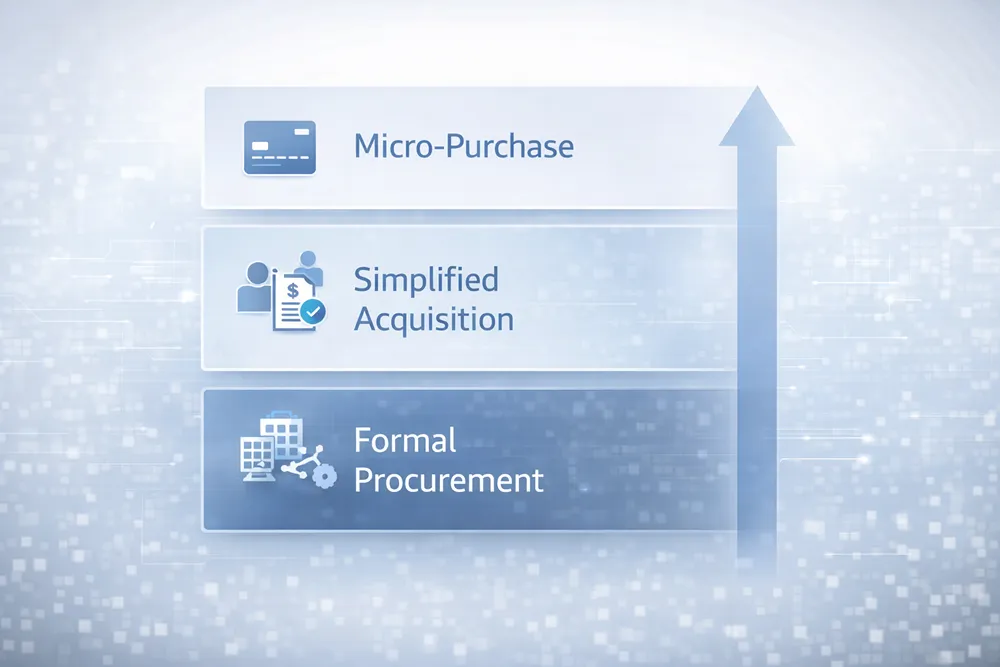
Understanding threshold levels proves critical for both agencies and contractors. Below the micro-purchase threshold (currently $10,000 for most agencies, $20,000 for specific circumstances), contracting officers may make purchases with minimal documentation and competition requirements, often using purchase cards. Between the micro-purchase threshold and the simplified acquisition threshold, contracting officers must promote competition and obtain competitive quotations if the contracting officer determines they are readily available, but evaluation procedures remain relatively informal compared to acquisitions exceeding the threshold.

The simplified acquisition threshold has increased over time to reflect inflation and policy goals of streamlining federal procurement. Historical increases from $100,000 to $150,000 in 2010, then to $250,000 in 2018, demonstrate legislative and regulatory intent to expand the use of simplified procedures. Certain special circumstances authorize higher thresholds—for example, acquisitions supporting contingency operations or humanitarian/peacekeeping efforts may use simplified procedures up to $800,000. Additionally, FAR Subpart 13.5 authorizes the use of simplified procedures for certain commercial products and commercial services in amounts greater than the simplified acquisition threshold but not exceeding $7.5 million, provided specific conditions are met. The Federal Acquisition Regulation website maintains current threshold values and special provisions.

How Do FAR Part 13 Simplified Procedures Work in Practice?

FAR Part 13 establishes the comprehensive framework governing simplified acquisitions, defining when simplified procedures may be used, what requirements apply, and what flexibilities contracting officers possess. The regulation balances efficiency objectives with fundamental principles including competition promotion, preference for commercial items, and set-aside requirements for small businesses. Contracting officers operating under Part 13 maintain broad discretion in tailoring procurement approaches to specific acquisition circumstances.

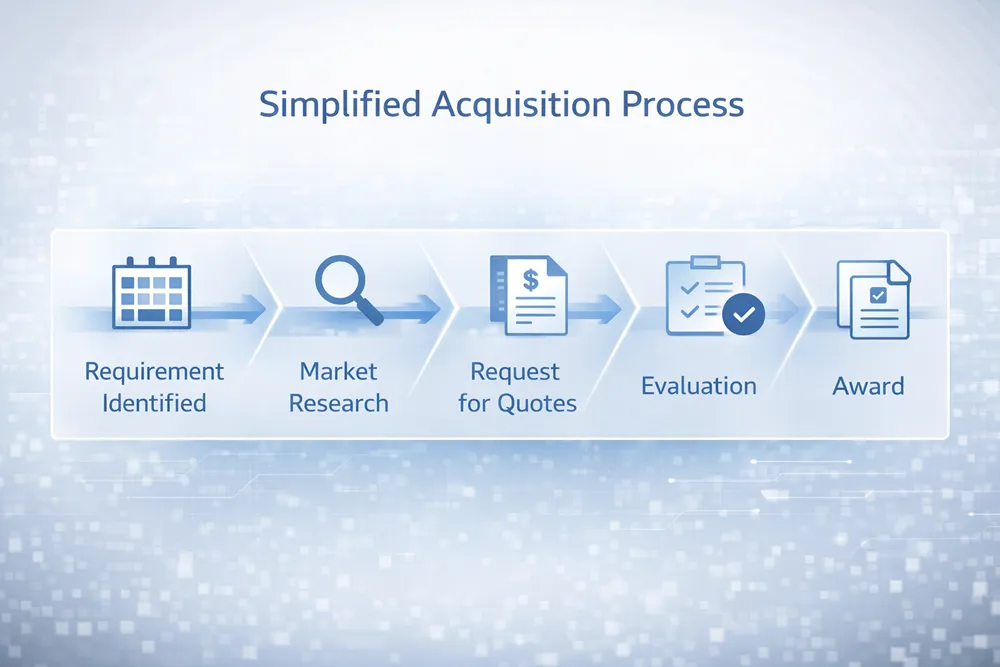
The simplified procedures in FAR Part 13 differ significantly from full and open competition requirements. Solicitations may take various forms—oral or written requests for quotations, simplified combined synopsis/solicitation documents, or streamlined requests for proposals. Contracting officers aren't required to synopsize requirements below $25,000 (with exceptions for certain commercial products and commercial services). Evaluation procedures remain flexible, with contracting officers selecting from the source whose offer represents the best value rather than following strict source selection procedures with formal evaluation criteria, scoring methodologies, and documentation requirements mandatory for larger procurements.

Key requirements persist even within simplified procedures. Contracting officers must conduct market research to identify commercial solutions and understand supplier capabilities. Competition must be promoted to the maximum extent practicable, typically soliciting quotations from multiple sources. Small business preferences apply—acquisitions expected to exceed the micro-purchase threshold but not exceed the simplified acquisition threshold must be set aside for small businesses unless the contracting officer determines there's no reasonable expectation of obtaining offers from two or more small business concerns that are competitive in price, quality, and delivery. Understanding procurement methods helps contractors navigate these requirements effectively.

What Small Business Set-Asides Apply to Simplified Acquisitions?

Small business preferences form a cornerstone of simplified acquisition procedures, with statutory and regulatory requirements designed to improve opportunities for small businesses in federal contracting. The default presumption for simplified acquisitions establishes that contracts expected to exceed the micro-purchase threshold but not exceed the simplified acquisition threshold must be set aside for small businesses, creating an automatic preference that contractors need not request.

Multiple small business categories receive additional preferences within simplified acquisitions. Service-disabled veteran-owned small business concerns receive highest priority for set-asides when there's a reasonable expectation of receiving offers from two or more qualified firms at fair market prices. HUBZone small businesses similarly receive preferences in geographic areas where HUBZone firms are available. Women-owned small businesses in designated industries and small disadvantaged businesses in applicable circumstances also benefit from set-aside provisions that channel contracting opportunities to these categories.

The practical impact proves substantial for qualifying small businesses. Set aside for small businesses requirements eliminate competition from large contractors for the vast majority of simplified acquisitions, dramatically improving win rates for small firms that would struggle competing against major contractors' resources and economies of scale. However, small businesses must maintain current registrations, certifications, and eligibility to benefit from these preferences. Registering in the System for Award Management (SAM), obtaining applicable small business certifications (8(a), HUBZone, SDVOSB, WOSB), and maintaining good standing proves essential for accessing these opportunities. The Small Business Administration provides comprehensive guidance on certification requirements and maintaining eligibility.

How Can Contractors Find and Compete for Simplified Acquisition Opportunities?

Finding simplified acquisition opportunities requires different approaches than identifying major competitive procurements. While acquisitions above $25,000 typically appear on SAM.gov's contract opportunities database, many simplified acquisitions below this threshold never receive public posting. Successful contractors employ multiple strategies to identify and capture these opportunities rather than relying solely on formal solicitation announcements.

Relationship building with contracting officers and program offices at target agencies represents perhaps the most effective strategy for simplified acquisitions. Because these procurements move quickly and often lack extensive lead times, contractors already known to agency personnel gain significant advantages. This doesn't imply favoritism or improper sole-source awards, but rather reflects practical realities—when contracting officers need something quickly, they solicit quotations from suppliers they know can deliver. Building these relationships requires persistent but professional outreach, attendance at industry days and networking events, capability briefings, and consistent delivery on initial small contracts that establish past performance credibility.

Market research and proactive positioning also prove critical. Contractors should monitor agencies' procurement forecast documents, which often indicate upcoming requirements including simplified acquisitions. Maintaining current capabilities statements, past performance documentation, and pricing information enables rapid response when opportunities arise. Some agencies maintain multiple award schedules or pre-qualified vendor lists specifically for simplified acquisitions, streamlining future procurements for both agencies and contractors. Securing positions on these vehicles provides recurring access to opportunities. Additionally, leveraging tools to find government contract opportunities expands visibility into potential requirements.

What Are Special Simplified Acquisition Procedures for Commercial Products?

FAR Subpart 13.5 establishes special simplified procedures for certain commercial products and commercial services in amounts greater than the simplified acquisition threshold but not exceeding $7.5 million (or $13 million for acquisitions as described in FAR 13.500(e)). These special procedures extend simplified acquisition benefits to a higher dollar range than standard Part 13 provisions, recognizing that commercial items generally require less government oversight and that streamlining benefits both agencies and vendors.

The procedures in FAR Subpart 13.5 combine elements from Part 12 (acquisition of commercial items) and Part 13, creating a hybrid approach. Contracting officers may use these procedures when acquiring commercial products and commercial services, provided they meet specific conditions including adequate competition, fair and reasonable pricing, and appropriate terms and conditions. The procedures allow simplified evaluation approaches focusing primarily on price and past performance rather than detailed technical evaluation criteria. Offers will include only commercial terms and conditions, avoiding complex FAR clauses typically required for non-commercial acquisitions.

For contractors, these special procedures create significant opportunities in the $250,000 to $7.5 million range—a sweet spot often too large for purely simplified treatment but too small to attract major prime contractors' attention. Commercial item status becomes crucial; products or services already sold to the general public or with only minor modifications qualify, while custom developments typically don't. Contractors should carefully review their offerings against commercial item definitions in FAR Part 2 and document commercial sales to support commercial item assertions. Understanding how FAR Part 12 provisions apply helps contractors position offerings appropriately for these special simplified procedures.

What Documentation and Compliance Requirements Apply to Simplified Acquisitions?

While simplified procedures reduce administrative burden compared to traditional procurements, contractors must still comply with specific documentation and regulatory requirements. Understanding what's required—and equally important, what's not—helps contractors respond efficiently without over-investing resources in unnecessary proposal elements or under-investing in critical compliance areas that could result in disqualification or contract issues.

Quote or proposal requirements for simplified acquisitions remain relatively minimal. Contracting officers typically request technical descriptions or specifications demonstrating capability to meet requirements, pricing breakdowns showing costs are fair and reasonable, delivery timelines, and past performance references. Unlike complex procurements requiring extensive technical volumes, management plans, and corporate experience documentation, simplified acquisition responses often run 5-20 pages total. The key is providing sufficient information for the contracting officer's evaluation without excessive elaboration that delays response or inflates costs.

Compliance requirements persist even under simplified procedures. Contractors must register in SAM and maintain current information including CAGE codes, NAICS codes, and representations and certifications. Small business status must be accurate for the applicable NAICS code. Required certifications regarding debarment, tax compliance, and other responsibility matters apply. Once awarded, contractors must comply with applicable FAR clauses incorporated into contracts, though simplified acquisitions incorporate fewer and simpler clauses than full FAR coverage contracts. Payment provisions, inspection and acceptance procedures, and warranty terms vary by acquisition but generally follow commercial practices. Developing expertise in government procurement cycles helps contractors understand timing and compliance touchpoints.

How Do Evaluation Procedures Differ for Simplified Acquisitions?

Evaluation procedures for simplified acquisitions differ substantially from the formal, structured approaches required for acquisitions exceeding the threshold. This flexibility represents both an opportunity and a challenge for contractors—opportunities exist to win based on factors beyond lowest price, but the subjective nature of evaluation creates uncertainty compared to transparent, published evaluation criteria in formal source selections.

Contracting officers evaluating simplified acquisitions typically focus on three primary considerations: price reasonableness, capability to perform (technical adequacy), and past performance. Unlike formal evaluations with weighted factors, rating schemes, and color scoring, simplified acquisition evaluations often involve straightforward determinations whether quotes meet requirements at fair prices. The contracting officer may award to other than the lowest-priced quotation if determining that offer represents the best value considering quality, delivery, and other relevant factors. This best-value flexibility means contractors shouldn't assume lowest price automatically wins.

Past performance carries significant weight even in simplified acquisitions. Contractors with demonstrated successful delivery on similar requirements enjoy advantages over unknown firms or those with questionable performance histories. This reality creates a "chicken and egg" challenge for new contractors—how to establish past performance without winning initial contracts? Strategies include pursuing micro-purchases to build track records, highlighting relevant commercial work, offering teaming arrangements with experienced contractors, and emphasizing key personnel experience when corporate experience is limited. Securing positive past performance evaluations from early contracts proves critical for accessing larger opportunities. Understanding how to craft compelling government RFP responses even in simplified formats helps contractors differentiate effectively.

What Common Mistakes Should Contractors Avoid in Simplified Acquisitions?

Contractors pursuing simplified acquisitions frequently make avoidable mistakes that reduce win rates or create contract performance issues. Understanding these common pitfalls helps contractors optimize their simplified acquisition strategies and avoid wasted effort on ineffective approaches or compliance problems that damage reputations with agencies.

Overcomplicating responses represents a frequent error. Contractors accustomed to complex proposal requirements often submit unnecessarily elaborate quotes for simplified acquisitions, wasting resources and potentially confusing evaluation. Remember that contracting officers conducting simplified acquisitions value efficiency—concise, clear responses that directly address requirements typically outperform lengthy submissions. Conversely, underestimating requirements proves equally problematic. Some contractors treat simplified acquisitions too casually, submitting inadequate technical descriptions, incomplete pricing, or missing required certifications, resulting in disqualification despite being technically capable.

Pricing mistakes frequently occur in simplified acquisitions. Contractors may underprice in hopes of winning, then struggle with profitability or inability to perform as quoted. Alternatively, some price too high relative to market rates, failing to win despite competitive capability. Conducting proper market research on comparable pricing, understanding true delivery costs, and pricing for reasonable profit ensures sustainable business while remaining competitive. Registration and certification oversights create unnecessary barriers—expired SAM registrations, lapsed small business certifications, or inaccurate NAICS code representations disqualify otherwise qualified contractors. Finally, neglecting relationship development in favor of passive opportunity monitoring limits access to the majority of simplified acquisitions that move quickly through informal networks rather than formal solicitations.

How Can Small and Disadvantaged Businesses Maximize Simplified Acquisition Opportunities?

Small and disadvantaged businesses possess inherent advantages in simplified acquisitions through statutory set-asides and preferences, but maximizing these opportunities requires strategic positioning beyond simply qualifying for small business status. Successful small businesses combine regulatory knowledge with proactive business development, operational excellence, and strategic relationship building to capture disproportionate shares of available simplified acquisition opportunities.

Certification strategy proves foundational. While general small business status provides access to standard set-asides, additional certifications (8(a), HUBZone, SDVOSB, WOSB) open doors to specific set-aside competitions with fewer competitors and higher win rates. Contractors should pursue all certifications for which they qualify, maintaining current documentation and understanding when each certification applies. Geographic considerations matter particularly for HUBZone—locating operations in designated areas or hiring HUBZone residents can qualify businesses for preferential treatment.

Operational excellence and responsiveness differentiate winning contractors from competitors even within set-aside competitions. Simplified acquisitions often move quickly, with short response times and rapid performance expectations. Contractors who respond promptly to solicitations, deliver on schedule, and perform quality work establish reputations enabling repeat business and referrals. Building capability statements, maintaining current pricing, and developing rapid response processes allows contractors to capitalize on opportunities other competitors miss due to slow mobilization. Additionally, pursuing teaming arrangements with complementary small businesses or serving as subcontractors to primes on larger contracts builds past performance and relationships that support future simplified acquisition pursuits. The General Services Administration (GSA) provides resources specifically designed to help small businesses win federal contracts and navigate simplified acquisition procedures effectively.

Frequently Asked Questions About Simplified Acquisition Procedures

Can contractors protest simplified acquisition awards? Yes, but protest rights are more limited than for larger procurements. Contractors may file protests with the agency or the Government Accountability Office (GAO), but GAO generally sustains protests of simplified acquisitions only for clear violations of regulations or when the contracting officer's actions were arbitrary or capricious. The streamlined nature of simplified procedures provides contracting officers with broad discretion that courts and oversight bodies generally respect.

Do simplified acquisitions require the same terms and conditions as full FAR contracts? No, simplified acquisitions typically incorporate fewer and simpler clauses. FAR 13.302 and related sections specify required and applicable clauses. Acquisitions of commercial products and commercial services use commercial terms to the maximum extent practicable. However, certain fundamental requirements (payment, inspection, disputes) apply regardless of dollar value or acquisition method.

How quickly do simplified acquisitions typically move from solicitation to award? Timelines vary significantly based on complexity and agency urgency. Simple acquisitions below $50,000 might award within days of solicitation. More complex simplified acquisitions approaching the threshold might take 2-4 weeks. The absence of required debriefing periods and protest windows allows faster awards than formal procurements, which typically require minimum 30-60 days between solicitation and award.

What happens if a simplified acquisition grows beyond the threshold during performance? Contracting officers may modify simplified acquisition contracts using procedures in this part, including increases exceeding the simplified acquisition threshold, provided the modification doesn't constitute a cardinal change to the contract's scope. However, new follow-on contracts exceeding the threshold must generally use appropriate procedures beyond Part 13, though Part 13.5 provisions may apply for commercial items.

Can contractors self-certify small business status for simplified acquisitions? Contractors represent their size status in SAM and in offer submissions, and these representations carry legal obligations. False certifications can result in civil and criminal penalties, suspension or debarment from federal contracting, and contract termination. The SBA may protest or initiate size determinations when contractors appear to exceed size standards for applicable NAICS codes.

Key Takeaways: Mastering Simplified Acquisition Procedures for Federal Contracting Success

  • Simplified acquisition procedures under FAR Part 13 streamline procurement for acquisitions below $250,000, reducing administrative burden through flexible evaluation, reduced documentation, and accelerated timelines that benefit both federal agencies and contractors
  • The simplified acquisition threshold of $250,000 establishes the boundary for using streamlined procedures, with special provisions under FAR Subpart 13.5 authorizing simplified procedures for certain commercial products and commercial services up to $7.5 million under specific conditions
  • Small business set-asides automatically apply to most simplified acquisitions between $10,000 and $250,000, creating opportunities for small businesses by eliminating competition from large contractors and channeling work to certified small firms
  • Multiple small business categories including service-disabled veteran-owned small businesses, HUBZone firms, women-owned small businesses, and small disadvantaged businesses receive additional preferences through tiered set-aside priorities
  • Finding opportunities requires proactive strategies beyond monitoring SAM.gov, including relationship building with contracting officers, market research on agency requirements, and positioning on pre-qualified vendor lists or multiple award schedules
  • Commercial item procedures under FAR Subpart 13.5 extend simplified acquisition benefits to higher dollar ranges for commercial products and services, creating a sweet spot for contractors offering commercially available solutions
  • Documentation requirements remain significantly lighter than formal procurements, focusing on technical capability, fair pricing, delivery timelines, and past performance rather than extensive proposal volumes and management plans
  • Evaluation procedures emphasize flexibility and best value rather than formal scoring methodologies, with price reasonableness, technical adequacy, and past performance serving as primary evaluation considerations
  • Common contractor mistakes include overcomplicating responses, inadequate pricing analysis, registration oversights, and passive opportunity monitoring rather than proactive relationship development with target agencies
  • Small business success in simplified acquisitions requires combining certification advantages with operational excellence, rapid responsiveness, strategic positioning, and consistent performance that builds past performance records enabling larger pursuits

Simplified acquisition procedures represent an accessible, high-volume segment of the federal marketplace where contractors—particularly small businesses—can establish federal contracting track records, develop agency relationships, and generate consistent revenue. Success requires understanding threshold requirements, set-aside rules, and evaluation approaches while avoiding common pitfalls that undermine competitiveness. Contractors who master these procedures, maintain proper registrations and certifications, respond rapidly to opportunities, and deliver quality performance position themselves for sustained growth in federal contracting. The streamlined nature of simplified acquisitions rewards contractors who combine regulatory knowledge with business development excellence, creating pathways from initial small contracts to larger, more complex opportunities as past performance and capabilities mature.

Other Blogs

OryonIQ Events

Events

Are you curious about the networking events near you? Together we can expand your network and watch your pipeline exponentially grow.