InstagramFacebookLinkedinMediumYoutubeX
Oryon iq

Simplified Acquisition Threshold: A Complete Guide to Streamlined Procurement for Small Business Contractors

The Simplified Acquisition Threshold (SAT) represents a critical dollar threshold in federal contracting that fundamentally changes how government agencies acquire supplies and services. Currently set at $250,000 as of October 1, 2020, this threshold enables contracting officers to use simplified acquisition procedures that reduce administrative burden, accelerate procurement timelines, and create opportunities for small business contractors to compete more effectively. Understanding simplified acquisitions under FAR Part 13 is essential for any contractor seeking to navigate federal procurement efficiently, as these streamlined procedures govern a significant portion of government purchasing activity. Whether you're a small business concern looking to break into federal contracting or an established contractor seeking to optimize your capture strategy, knowing how the simplified acquisition threshold works—including set-aside requirements, competition mandates, and compliance considerations—can unlock substantial opportunities for your business. This comprehensive guide explains what the SAT is, how agencies may use simplified acquisition procedures, and practical strategies for contractors to succeed in this vital segment of the federal marketplace.

What Is the Simplified Acquisition Threshold and Why Does It Matter?

The Simplified Acquisition Threshold is the dollar amount below which federal agencies may use simplified acquisition procedures to acquire supplies and services more quickly and with less administrative burden than full and open competition requires. The SAT is currently set at $250,000 for most federal procurements, though certain threshold amounts vary for specific circumstances including commercial items, contingency operations, and construction contracts.

The Federal Acquisition Regulation (FAR) establishes the simplified acquisition threshold as a fundamental dividing line in federal procurement methodology. Below this threshold, contracting officers can use streamlined procedures outlined in FAR Part 13 that simplify the acquisition process through reduced documentation requirements, expedited timelines, and more flexible evaluation procedures. These simplified procedures enable agencies to procure goods and services efficiently without the extensive formal processes required for larger acquisitions.

For contractors, especially small businesses, the SAT creates accessible entry points into federal contracting. Simplified acquisitions typically involve less complex proposal requirements, faster award decisions, and lower barriers to entry compared to major procurements. The simplified acquisition procedure allows companies to demonstrate their capabilities, build past performance records, and establish relationships with contracting officers—all foundational elements for growing within federal contracting. Understanding how to identify and pursue opportunities below the simplified acquisition threshold should be a core component of any small business federal acquisition strategy. Resources like understanding the government procurement cycle provide valuable context for how SAT fits within broader procurement frameworks.

How Do Simplified Acquisition Procedures Differ from Standard Procurement?

Simplified acquisition procedures under Part 13 of the Federal Acquisition Regulation fundamentally differ from the more rigorous requirements governing larger procurements. These differences create both opportunities and specific considerations for contractors pursuing work below the threshold.

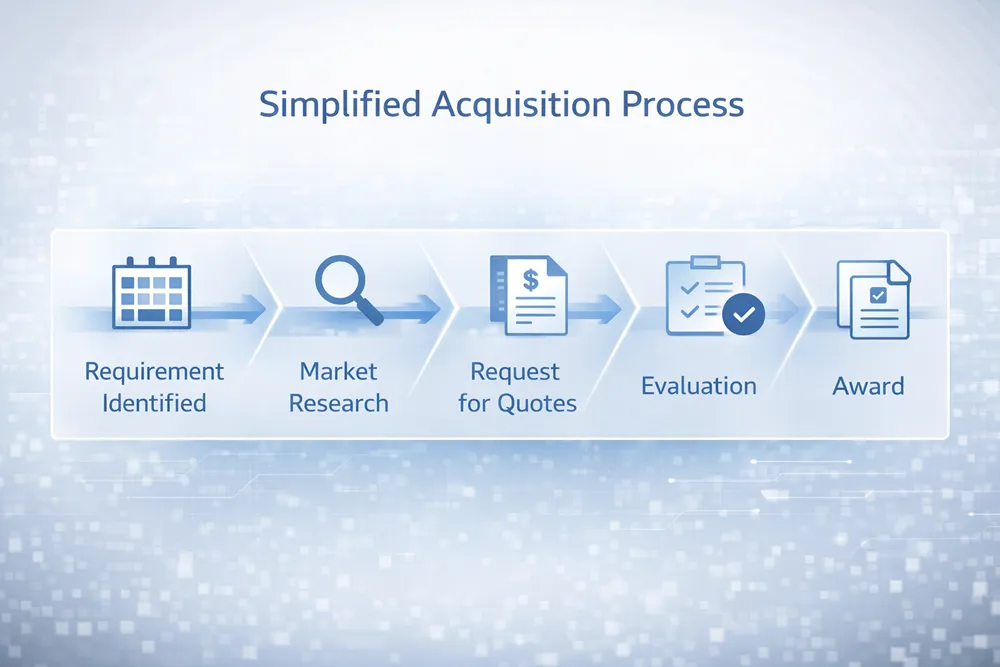
The solicitation process for simplified acquisitions typically requires less formal documentation and can proceed much faster than standard procurements. Rather than issuing detailed Requests for Proposal (RFPs), agencies often use Request for Quotation (RFQ) formats that focus on essential requirements without extensive specifications or evaluation criteria. Contracting officers have greater flexibility in how they solicit quotations, including oral solicitations for certain purchases. This streamlined approach reduces preparation time for both agencies and contractors, enabling faster response to operational needs.

Competition requirements still apply to simplified acquisitions, though implemented more flexibly than in major procurements. The Federal Acquisition Regulatory Council requires agencies to promote competition to the maximum extent practicable when using simplified procedures. However, "maximum practicable" allows contracting officers to tailor competition strategies based on market conditions, urgency, and administrative efficiency. For purchases between $10,000 and the SAT, agencies typically must solicit at least three sources unless market research indicates fewer qualified sources exist. This requirement ensures competition while avoiding the extensive public notice and evaluation procedures required above the threshold.

Evaluation procedures for simplified acquisitions emphasize efficiency over comprehensive analysis. Rather than detailed technical evaluations with scoring matrices and competitive range determinations, contracting officers may use simplified selection procedures focusing on key factors like price or cost, past performance, and technical acceptability. The goal is identifying acceptable solutions at fair and reasonable prices without extensive comparative analysis. Award will be made to the contractor providing the best value considering these streamlined factors, with decisions typically occurring much faster than in major procurements. For contractors, this means proposals should be concise and clearly demonstrate value rather than providing exhaustive technical discussions.

What Is the Micro-Purchase Threshold and How Does It Relate to SAT?

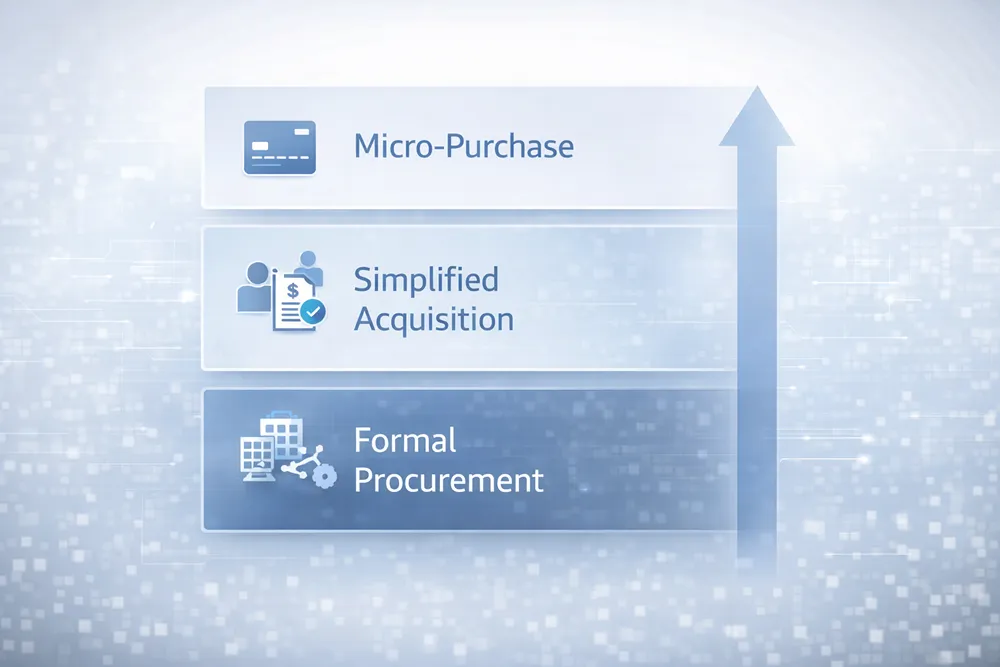
Below the Simplified Acquisition Threshold exists an even lower dollar threshold called the micro-purchase threshold, currently set at $10,000 for most purchases (higher for certain circumstances). This ultra-simplified category enables the most streamlined procurement approach in federal contracting, with minimal administrative requirements and maximum flexibility for contracting officers.

Micro-purchases typically occur via a government purchase card, allowing authorized personnel to make purchases quickly without formal solicitation, quotation, or contract documentation. The purchase card functions like a corporate credit card, enabling immediate acquisition of supplies or services needed for day-to-day operations. These micro-purchases must still comply with basic requirements including obtaining supplies or services at fair market prices and rotating among qualified suppliers to promote competition, but formal competition and documentation requirements are minimal.

For small business contractors, micro-purchases represent accessible opportunities requiring virtually no proposal effort. Building relationships with cardholders at agencies whose missions align with your capabilities can generate steady revenue streams from routine purchases. While individual micro-purchases stay below the $10,000 threshold, cumulative annual purchases from a single cardholder or agency can represent significant business. The key is making it easy for cardholders to find and purchase from you—maintaining current GSA Schedule contracts, responding quickly to inquiries, and providing excellent customer service that encourages repeat purchases.

The distinction between micro-purchase threshold and simplified acquisition threshold matters because different rules apply at each level. Between the micro-purchase threshold ($10,000) and the SAT ($250,000), simplified acquisition procedures apply but require more documentation, competition, and oversight than micro-purchases. Understanding these thresholds helps contractors identify appropriate opportunities and understand what level of effort agencies will require for different dollar value purchases.

How Are Simplified Acquisitions Set Aside for Small Businesses?

The Small Business Act and implementing regulations mandate significant small business set-aside requirements for simplified acquisitions, creating substantial opportunities for small business concerns. These set-aside rules ensure that small businesses receive fair opportunities to compete for federal contracts even under streamlined procedures.

For acquisitions between the micro-purchase threshold and the SAT, the contracting officer must consider whether the acquisition should be set aside for small businesses. The general rule states that acquisitions between these thresholds shall be set aside exclusively for small businesses unless the contracting officer determines there is not a reasonable expectation of obtaining offers from two or more small business concerns that are competitive in terms of quality, delivery, and price. This presumption favoring small business set-asides creates protected competition where small contractors don't face large business competitors.

Specific socioeconomic small business categories receive additional preferences within the simplified acquisition framework. Categories include Women-Owned Small Business (WOSB), Service-Disabled Veteran-Owned Small Business (SDVOSB), Historically Underutilized Business Zone (HUBZone) small business concerns, and small disadvantaged business enterprises. Contracting officers must consider these preferences when conducting market research and structuring acquisitions, with specific order-of-precedence rules determining which set-aside type applies when multiple options exist. For contractors holding these certifications, understanding set-aside requirements helps identify opportunities where competition is limited to your category.

Even when simplified acquisitions aren't formally set aside, small businesses still receive preferences through evaluation considerations. Contracting officers may consider whether contractors are small businesses when making award decisions, and agencies must meet government-wide and agency-specific small business contracting goals that create incentives to award work to small concerns. These structural preferences mean small businesses often compete effectively even in unrestricted simplified acquisitions. Resources from the Small Business Administration provide detailed guidance on set-aside programs and eligibility requirements.

What Are the Current Dollar Thresholds and When Do They Change?

The Simplified Acquisition Threshold is currently set at $250,000 for most acquisitions, effective October 1, 2020, when the most recent adjustment took effect. However, multiple variations and exceptions create a more complex threshold landscape that contractors should understand.

For commercial items acquired using simplified acquisition procedures, agencies may use these procedures up to $7.5 million rather than the standard SAT. This higher dollar threshold reflects the government's policy preference for acquiring commercial products and services, which are presumed to offer better value and require less government oversight than items developed specifically for federal use. Contractors offering commercial items benefit from this expanded threshold, as more of their federal opportunities can proceed through simplified procedures rather than requiring full and open competition processes. Understanding whether your offerings qualify as commercial items under FAR definitions can significantly impact your federal contracting strategy.

During contingency operations and for acquisitions made outside the United States, the SAT increases to $800,000 for contracts supporting deployed forces. This elevated threshold acknowledges the operational realities and administrative challenges of procurement in austere or hostile environments where streamlined acquisition is essential for mission success. Defense contractors supporting deployed operations should understand these elevated thresholds and the flexibility they provide contracting officers operating in contingency environments.

The Federal Acquisition Regulatory Council periodically adjusts threshold amounts to account for inflation and maintain the efficiency benefits that simplified procedures provide. The most recent adjustment occurred October 1, 2020, when the SAT increased from $150,000 to $250,000. Future adjustments typically follow inflation-based formulas, though specific timing depends on regulatory action by the FAR Council. Contractors should monitor the Acquisition.gov website for announcements of threshold changes that might impact their market opportunities or compliance requirements.

How Should Contractors Pursue Simplified Acquisition Opportunities?

Successfully pursuing simplified acquisitions requires different strategies and approaches than major procurement competitions. Understanding these distinctions helps contractors optimize their business development efforts and win rates in this vital market segment.

Market research and relationship building prove particularly important for simplified acquisitions because these opportunities often move quickly with limited public visibility. Unlike major procurements with lengthy pre-solicitation periods, simplified acquisitions may proceed from identification of need to contract award in days or weeks. Maintaining ongoing relationships with contracting officers and program personnel who understand your capabilities positions you to respond when requirements emerge. Regular capability briefings, attendance at agency small business events, and participation in one-on-one meetings help ensure your company stays top-of-mind when agencies identify simplified acquisition requirements.

Registration in key contract vehicles amplifies your access to simplified acquisition opportunities. GSA Schedule contracts provide pre-approved vehicles that agencies frequently use for purchases below the SAT, eliminating the need for separate competitions. Holding relevant GSA Schedule contracts means agencies can purchase from you immediately using simplified ordering procedures rather than conducting standalone acquisitions. Similarly, category-specific contract vehicles and agency-specific indefinite delivery/indefinite quantity (IDIQ) contracts provide streamlined ordering mechanisms that facilitate rapid procurement. Investing in obtaining these contract vehicles pays dividends through easier access to simplified acquisition work. Contractors can explore tools to find government contract bid and RFP opportunities to identify relevant simplified acquisitions.

Quotation development for simplified acquisitions should emphasize clarity, conciseness, and responsiveness over comprehensive detail. Unlike formal proposals that might span hundreds of pages, simplified acquisition quotations typically run just a few pages addressing the essential requirements. Focus on demonstrating you understand the requirement, can deliver the product or service as specified, offer fair and reasonable pricing, and have relevant past performance. Contracting officers evaluating quotations under simplified procedures want sufficient information to make informed decisions without wading through excessive documentation. Your ability to communicate value efficiently often matters as much as technical excellence when agencies evaluate quotations under time pressure.

What Compliance Requirements Apply to Simplified Acquisitions?

While simplified acquisition procedures reduce administrative burden compared to major procurements, significant compliance requirements still apply. Contractors must understand and meet these obligations to avoid contract issues or potential debarment.

Many standard FAR clauses flow down to simplified acquisition contracts, including fundamental requirements related to labor standards, equal opportunity, environmental compliance, and business ethics. Even though the acquisition process itself is simplified, contracts awarded through these procedures remain federal contracts subject to the same underlying regulatory framework governing all government contracting. Contractors must still maintain compliant accounting systems, protect government information appropriately, report contractor business system deficiencies, and meet all certification requirements.

Small business representation and certification requirements apply to simplified acquisitions just as they do to major contracts. When contractors represent themselves as small businesses, women-owned small businesses, service-disabled veteran-owned small businesses, or other socioeconomic categories to qualify for set-aside opportunities, those representations must be accurate. Misrepresentation of small business status constitutes a serious compliance violation that can result in contract termination, monetary penalties, and debarment from federal contracting. The System for Award Management (SAM) registration must accurately reflect your business size, ownership, and certifications.

Subcontracting compliance matters even in simplified acquisitions. If your contract includes subcontracting plans or small business subcontracting goals, you must meet those requirements regardless of the simplified nature of the prime contract. Similarly, Buy American requirements, Trade Agreements Act compliance, and country-of-origin restrictions apply to simplified acquisitions just as they do to larger contracts. Contractors must still conduct due diligence ensuring products meet applicable requirements and maintain documentation proving compliance if questioned.

How Do Agencies Use Purchase Orders in Simplified Acquisitions?

Purchase orders represent one of the most common simplified acquisition methods, providing a straightforward contractual vehicle for acquiring supplies or services below the threshold. Understanding how purchase orders work helps contractors navigate this prevalent acquisition approach effectively.

A purchase order is a written offer by the government to buy supplies or services from commercial sources. When accepted by the contractor, either through performance or explicit acceptance, the purchase order becomes a binding contract. Purchase orders typically incorporate standard terms and conditions by reference, including applicable FAR clauses, rather than spelling out all contractual requirements explicitly. Contractors must ensure they understand these incorporated terms even though they're not physically included in the purchase order document.

The government purchase card represents a variation on traditional purchase orders, enabling even more streamlined micro-purchases and small simplified acquisitions. Authorized cardholders can make purchases up to their delegation limits using the purchase card, with the transaction constituting a binding contract upon acceptance. For contractors, accepting government purchase cards broadens market access by making it easy for agencies to procure from you without traditional contracting documentation. However, contractors must still comply with all applicable requirements even when payment occurs via purchase card rather than traditional invoice and payment processes.

Past performance evaluation applies to purchase orders and other simplified acquisition contracts just as it does to major contracts. Even small purchase orders below the SAT can generate CPARS ratings that become part of your contractor performance record. Treating every simplified acquisition professionally—delivering on time, maintaining quality, and communicating effectively—builds the past performance record essential for competing for larger opportunities. Strong performance on simplified acquisitions often opens doors to more substantial contracts as agencies gain confidence in your reliability. Understanding winning strategies for government RFP responses prepares contractors to eventually compete for opportunities above the SAT.

What Role Does the Simplified Acquisition Threshold Play in Subcontracting?

The Simplified Acquisition Threshold affects not just prime contracting but also subcontracting dynamics, creating specific considerations for both prime contractors and subcontractors. Understanding these implications helps companies on both sides of the prime-subcontractor relationship.

For prime contractors, the SAT determines which subcontracts require competitive procedures versus simplified approaches. While the FAR doesn't directly regulate subcontracting (prime contractors generally control their own subcontracting processes), many primes adopt acquisition methods similar to government practices when soliciting subcontractors. Using simplified procedures for subcontracts below the threshold streamlines supply chain management and reduces administrative costs while maintaining appropriate oversight.

Small business subcontracting plans often reference the simplified acquisition threshold when establishing procedures for maximizing small business participation. Prime contractors with subcontracting plans must make good faith efforts to award subcontracts to small businesses, with specific targets for dollars awarded to various small business categories. The streamlined nature of simplified acquisitions—both prime contracts and subcontracts—can facilitate small business participation by reducing barriers and administrative burden that sometimes discourage small subcontractor involvement.

For subcontractors, understanding that prime contractors may use simplified procedures for lower-value subcontracts helps set appropriate expectations regarding solicitation formality, evaluation rigor, and award timing. Just as government agencies use streamlined approaches below the SAT, prime contractors often follow similar patterns when acquiring subcontractor support. This means subcontractors should prepare quotations and proposals appropriately scaled to the dollar value and complexity involved rather than over-investing in responses to simplified subcontract opportunities.

How Has the Simplified Acquisition Threshold Changed Over Time?

The Simplified Acquisition Threshold has evolved significantly since its inception, reflecting inflation, policy priorities, and lessons learned about optimal threshold levels. Understanding this history provides context for current thresholds and potential future changes.

The SAT was originally established at much lower levels when simplified acquisition procedures were first codified. Over decades, periodic adjustments gradually increased the threshold to maintain its purchasing power and policy effectiveness. The most significant recent change occurred October 1, 2020, when the threshold jumped from $150,000 to $250,000—a substantial increase reflecting both inflation and policy decisions to expand the applicability of simplified procedures.

This 2020 adjustment to $250,000 created meaningful practical impacts for both agencies and contractors. For agencies, the higher threshold enabled simplified acquisition procedure usage for a larger universe of requirements, reducing administrative burden and accelerating procurement cycles. Contracting officers could use streamlined approaches for acquisitions that previously required full and open competition processes, improving efficiency particularly for routine commercial item purchases.

For contractors, especially small businesses, the higher SAT created both opportunities and competition considerations. The expanded simplified acquisition universe meant more accessible opportunities with lower entry barriers. However, it also meant that some acquisitions previously requiring full and open competition—with associated public notice and formal evaluation—could now proceed through simplified procedures with potentially limited visibility. Contractors needed to adapt business development strategies to ensure they didn't miss opportunities that became less publicly visible under simplified procedures. Future threshold adjustments will likely continue balancing administrative efficiency against transparency and competition objectives.

What Strategies Help Small Businesses Succeed with Simplified Acquisitions?

Small business contractors can employ specific strategies to maximize success in capturing simplified acquisition opportunities and building sustainable federal contracting businesses through this vital market segment.

Aggressively pursue small business set-aside opportunities where you face competition only from other small concerns rather than large businesses. The set aside for small businesses provisions in simplified acquisitions level the playing field by limiting competition to companies of similar size and resource levels. Register your small business status accurately in SAM, obtain relevant socioeconomic certifications (WOSB, SDVOSB, HUBZone, etc.) if eligible, and actively market your capabilities to agencies' small business specialists who influence set-aside decisions. Building reputation as a reliable small business performer creates repeat opportunities as agencies return to proven partners for similar requirements.

Develop relationships specifically with contracting officers and technical personnel who manage simplified acquisitions. These buyers often handle high volumes of smaller procurements and value responsive, reliable contractors who make their jobs easier. Unlike major program offices focused on large acquisitions, offices managing simplified purchases need suppliers who respond quickly, deliver consistently, and minimize administrative burden. Position your company as the easy choice—responsive to inquiries, flexible on requirements, reliable on delivery, and professional in all interactions. These relationship-built advantages often matter more in simplified acquisitions than in major competitions where formal evaluation criteria dominate.

Invest in capabilities that support quick response to simplified acquisition opportunities. Simplified procedures often move rapidly from requirement identification to award, giving contractors limited time to prepare quotations. Having pre-written capability statements, past performance summaries, pricing templates, and standard technical approaches allows you to respond quickly when opportunities emerge. Consider mastering government proposal writing techniques adapted for simplified acquisition quotations. Some contractors maintain "proposal-ready" status specifically for simplified acquisitions, enabling same-day or next-day responses that demonstrate responsiveness agencies value highly.

Key Takeaways: Mastering Simplified Acquisition Threshold Opportunities

  • SAT is currently $250,000: The Simplified Acquisition Threshold stands at $250,000 for most procurements, enabling streamlined procedures for acquisitions below this dollar amount
  • Simplified procedures reduce burden: FAR Part 13 allows contracting officers to use simplified acquisition procedures that accelerate procurement and reduce administrative requirements compared to full and open competition
  • Small business set-asides are mandated: Acquisitions between $10,000 and $250,000 must be set aside exclusively for small businesses unless insufficient competition exists, creating protected opportunities
  • Multiple thresholds exist: The micro-purchase threshold ($10,000), standard SAT ($250,000), commercial item threshold ($7.5 million), and contingency operations threshold ($800,000) create a tiered system
  • Competition remains important: While procedures are simplified, agencies must still promote competition to the maximum extent practicable, typically soliciting multiple quotations
  • GSA Schedules provide access: Holding GSA Schedule contracts facilitates simplified acquisition purchases by providing pre-approved vehicles agencies can use quickly
  • Compliance still applies: Despite simplified procedures, standard FAR clauses and requirements including labor standards, small business representations, and ethics provisions remain applicable
  • Quick response matters: Simplified acquisitions often move rapidly from requirement to award, rewarding contractors who can respond quickly with quality quotations
  • Relationships drive success: Building relationships with contracting officers who manage simplified acquisitions creates visibility and repeat opportunities
  • Past performance counts: Even small simplified acquisition contracts generate past performance ratings that become essential credentials for competing for larger opportunities

The Simplified Acquisition Threshold represents a critical inflection point in federal procurement, creating a large market segment where streamlined procedures enable efficient purchasing while maintaining competition and small business access. For contractors, particularly small businesses, understanding how to identify and win simplified acquisitions provides an accessible pathway into federal contracting and foundation for sustainable business growth. The combination of reduced administrative burden, mandatory small business considerations, and rapid award timelines makes simplified acquisitions an attractive market segment for companies at any stage of federal contracting maturity.

Ready to optimize your approach to simplified acquisition opportunities and grow your federal contracting business? Contact our team to discuss strategies for identifying and winning contracts below the threshold while building the foundation for larger opportunities.

Other Blogs

OryonIQ Events

Events

Are you curious about the networking events near you? Together we can expand your network and watch your pipeline exponentially grow.